
We did research, to know what do people think about the relation between poverty and addiction. In order to understand how people perceive the issue, we did a survey to UDLAP students. This are the results
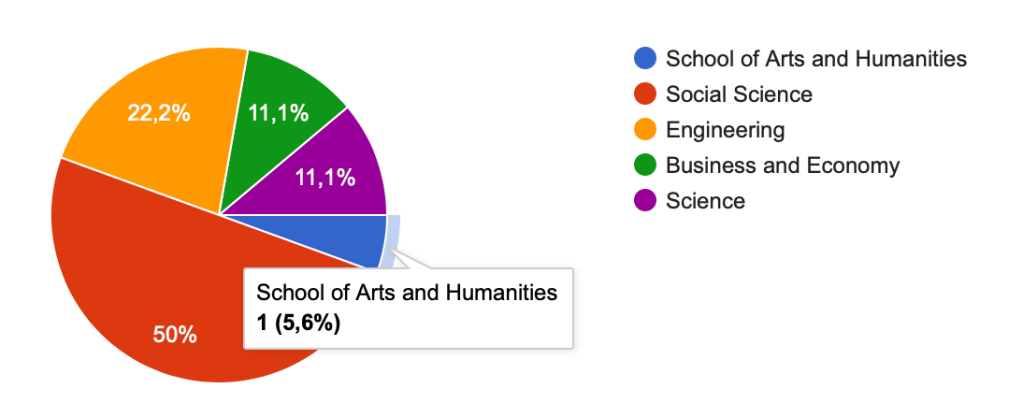
We started by asking the participant their area of study. So we can have a better idea of our demographic.
According to the graphic (Figure 1) we can see that 50% of the participants are from Social Science School, 22.2% are from the Engineering School, both Business and Science School have 11.1%, leaving School of Arts and Humanities with the remaining 5.6%.
Since our survey has been made to UDLAP students we’ve only got the ages between 18 and 29 years old (Figure 2).

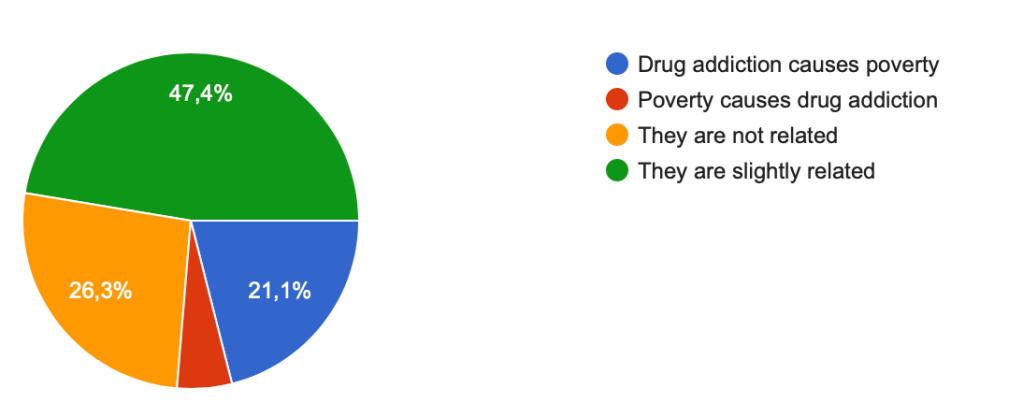
We then asked, what was the relation between poverty and addiction. 47.4% that drugs and poverty are only slightly related, 26.3% think that this two are not related, 21.1% thinks that actually drugs creates poverty and the last 5% thinks that poverty causes drug addiction (Figure 3).
We also asked, the reason of the use of drugs, 45% of our participants, thinks that the reason has to be related with the environment they’re in, 30% thinks that the reason is that these persons are having a difficult situation, 15% thinks the reason of persons consuming drugs is because they’re bored and 10% of them thinks that the persons have low self-steem (Figure 4).

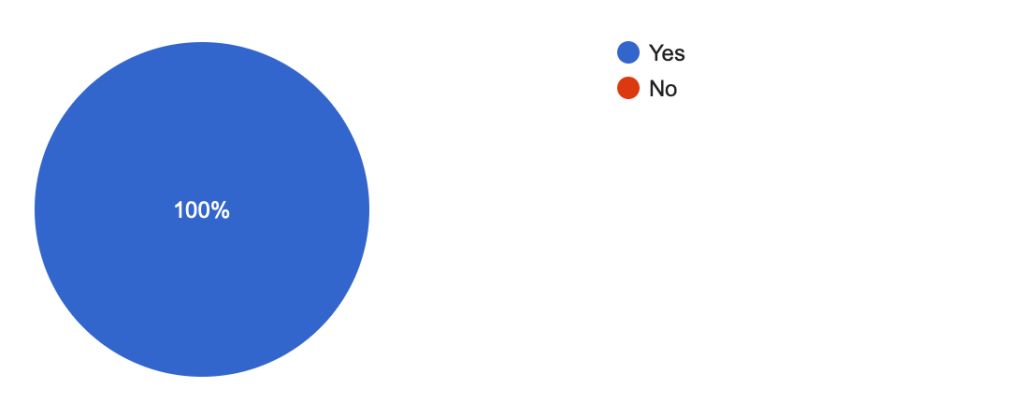
We asked if they thought the chances of a person getting addicted increased if they grew up or live in an environment were there is violence and drug trafficking. 100% agreed on this one (Figure 5).
Based on the last question, we asked them why? and why not?, there’s no answers for the second one because all of them answered “Yes”. So, many said that the environment can heavily influence a persons behavior, others said that in those environments there is more social pressure to consume, or that it’s their way to escape from that violent environment. But one person really got our attention, answering the following:
“The people around you make a huge difference, if you’re surrounded by people that are from a low economy sector of a city it’s more probable that you’ll end up taking highly addictive and destructive drugs, because they’re cheaper and easier to get, and they may do it to feel relieved. In the other side you can end up taking drugs because you want to, for medicinal purposes, and there’s nothing wrong about it, just don’t hurt yourself and others around you, and if you have friends that do drugs or alcohol and they respect you if you don’t or tell you the risks of them before you try them, it’s very probable that they have a higher cultural level than people that bullies you and molest you because you don’t like them and forcing you to try them to feel accepted or to make them stop messing with you by doing what they want you to do. I’m way to high to write something that makes sense. And it was my choice to do that and I don’t regret it, and i have a very good educational and cultural formation, and I grew surrounded by people that never tried a single drug in their hole life.”-Anonymous, 2019.
We also asked if they think a person with higher education is less likely to become addicted. The majority said that people with a better education would be more aware of the consequences therefore it would be less like for them to become addicted, others said that education has nothing to do with it and that it’s about the character of each person and their will. Also a person answered in an incredible way, writing this:
“No, because your education, whether it’s good or bad, doesn’t influence if you’ll end up doing drugs. When a person becomes an addict has to do with the people it is surrounded with and sometimes the attention they receive in their home.”-Anonymous, 2019.
We asked if they thought that a person who sells drugs for a living is more likely to get addicted. Some said yes because it’s easier for them to get involved because they have access to the product, many said no because they just do it for the income and that they know how bad is the stuff they are selling.
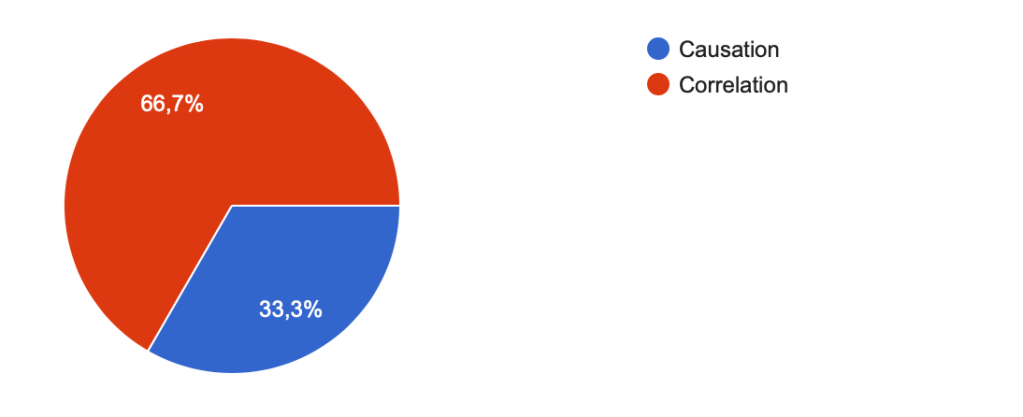
We asked if there is a correlation or a causation between poverty and addiction. 66.7% said that there is a correlation 33.6% said that there is a causation (Figure 6).
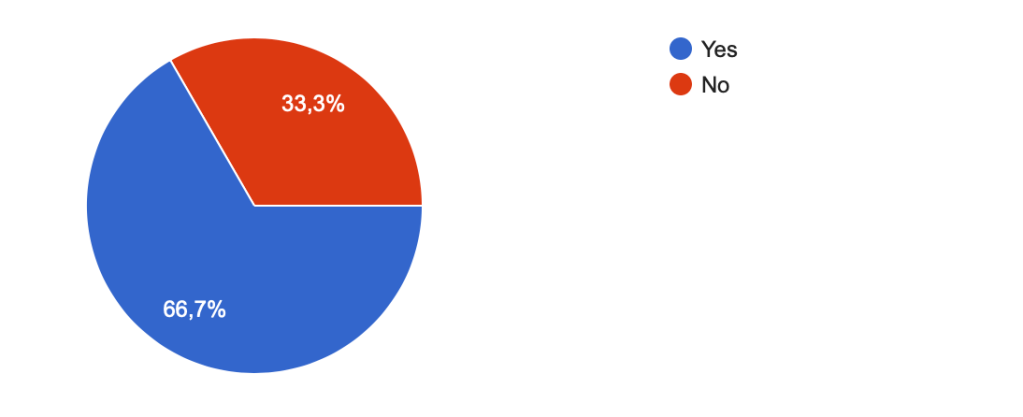
We asked if they have ever consumed drugs. 66.7% said that they have 33.3% said that they haven’t (Figure 7).
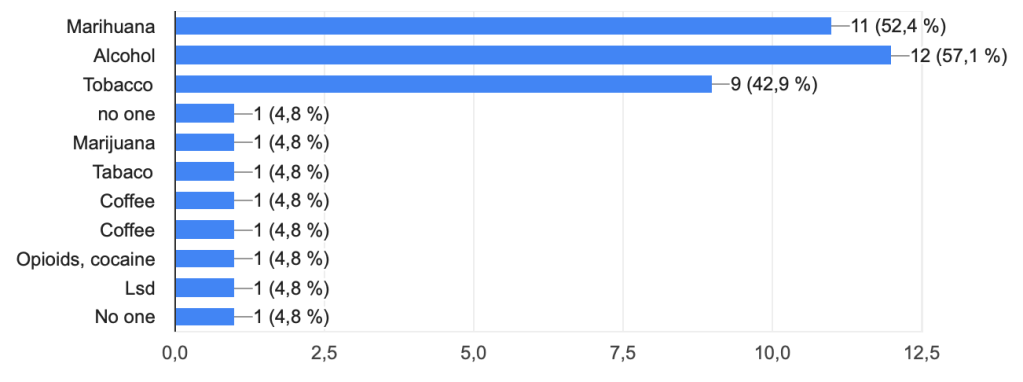
We asked to the persons that answered “No”, why they haven’t consumed drugs? Many said that they know about the consequences and don’t want to become addicted, and others simply said that they did it want to in the moment. And to the persons that answered “Yes” we’ve asked them what drugs have they tried. 57.1% said alcohol, 52.4% said marihuana, 42.9% said tobacco, 4.8% said opioids and cocaine, 4.8% said LSD (Figure 8).
 Is Poverty related to addiction?